
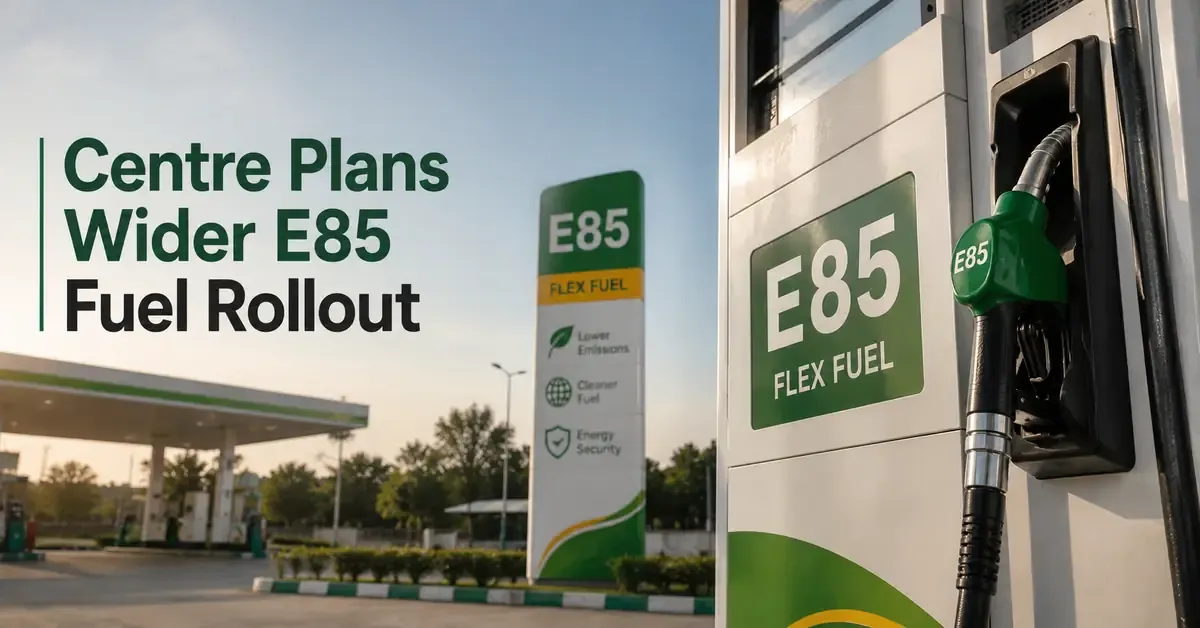
E85 fuel, a high-ethanol blend fuel, has reportedly become available at select fuel stations in Delhi, and the biggest reason people are talking about it is simple:
👉 It’s around ₹20 cheaper than E20 fuel in some locations.
At a time when fuel costs continue to impact household budgets, the arrival of E85 is generating excitement among motorists, environmentalists, and the automotive industry alike.
What Is E85 Fuel?
E85 is a fuel blend containing:
✔ Up to 85% ethanol
✔ Around 15% petrol
This makes it significantly different from:
- E10 (10% ethanol)
- E20 (20% ethanol)
which are already being promoted across India.
Because ethanol is produced from agricultural feedstocks such as sugarcane and other biomass sources, E85 is often viewed as a cleaner and more sustainable fuel alternative.
Why Is E85 Cheaper Than E20?
The biggest talking point is the price.
Motorists visiting newly introduced E85 fuel stations are noticing savings of approximately:
👉 ₹15–₹20 per litre
compared to conventional petrol blends.
The lower cost is largely linked to:
✔ domestic ethanol production
✔ reduced dependence on imported crude oil
✔ government-supported biofuel initiatives
For daily commuters, this price difference can translate into significant monthly savings.
Can Every Car Use E85 Fuel?
This is the most important question.
The answer is:
❌ No.
E85 fuel is designed primarily for flex-fuel vehicles (FFVs) that are specifically engineered to handle high ethanol concentrations.
Using E85 in vehicles not designed for it may lead to:
- Fuel system damage
- Reduced engine performance
- Component wear
- Warranty issues
Drivers should always check their vehicle manufacturer’s recommendations before filling E85.
Why India Is Pushing Ethanol-Blended Fuels
India has been aggressively expanding its ethanol program to:
✔ reduce oil imports
✔ improve energy security
✔ support farmers
✔ lower emissions
The government has already achieved significant progress with E20 fuel adoption, and E85 represents another major step toward reducing reliance on fossil fuels.
Environmental Benefits of E85
Supporters of ethanol fuel argue that it offers several advantages:
🌱 Lower carbon emissions
🌱 Reduced dependence on imported petroleum
🌱 Increased use of renewable resources
🌱 Support for India’s agricultural economy
While debates continue about the overall environmental impact of large-scale ethanol production, E85 is generally viewed as a cleaner alternative to traditional petrol.
Why E85 Fuel Is Trending Online
Searches related to E85 are rising because people want answers to questions such as:
- What is E85 fuel?
- Is E85 available in India?
- E85 fuel price in Delhi
- E85 vs E20
- Which cars support E85 fuel?
The combination of lower fuel prices and environmental benefits has made it one of the most discussed automotive topics of the week.
Challenges Ahead
Despite the excitement, several challenges remain:
✔ Limited availability of E85 stations
✔ Small number of flex-fuel vehicles on Indian roads
✔ Consumer awareness issues
✔ Infrastructure expansion requirements
The success of E85 will depend on how quickly automakers and fuel retailers adapt.
Could E85 Change India’s Fuel Market?
If adoption grows and more manufacturers launch flex-fuel vehicles, E85 could become a significant part of India’s transportation ecosystem.
For drivers who own compatible vehicles, the fuel offers a compelling combination of:
👉 lower running costs
👉 cleaner emissions
👉 reduced dependence on imported oil
That makes it one of the most interesting fuel developments India has seen in recent years.
Final Verdict
The arrival of E85 fuel in Delhi marks an important milestone for India’s biofuel ambitions.
The headline-grabbing savings of nearly ₹20 per litre compared to E20 are certainly attracting attention, but motorists should remember one crucial point:
Only vehicles designed for high-ethanol fuel should use E85.
If infrastructure expands and more flex-fuel cars hit the market, E85 could play a major role in reshaping how India fuels its future. ⛽🇮🇳