
Learning guitar chords is usually the first real step in becoming a guitarist.
You may know how to hold the guitar, tune the strings and play a few individual notes, but the moment you can play a chord progression, things start becoming exciting. Suddenly, you can accompany yourself while singing, play familiar melodies and even perform complete songs.
The good news is that you don’t need to learn hundreds of chords to get started.
A handful of basic guitar chords for beginners can help you play hundreds of popular songs, including many Hindi songs. The real challenge is understanding where to place your fingers and practising enough to switch between chords smoothly.
That’s exactly what this guide is about.
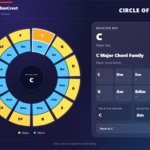
Try Our Interactive Guitar Chord Map
Before we get into the theory, here’s something that can make learning much easier.
Guitar Chord Map
Find simple guitar chord shapes instantly
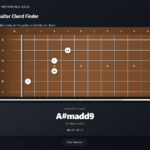
Instead of trying to understand a complicated guitar chords chart, you can select a chord and see exactly where your fingers need to go on the guitar fretboard.
This is especially helpful for beginners who often get confused by traditional chord diagrams.
What Are Guitar Chords?
A guitar chord is created when you play multiple notes together.
For example, when you play a C major chord, several strings are pressed at specific positions and played together. The combination of those notes creates the sound we recognise as C major.
Different combinations create different types of chords:
- Major chords
- Minor chords
- Seventh chords
- Suspended chords
- Diminished chords
- Augmented chords
But don’t worry about all of them right now.
If you’re just starting, learning basic major and minor chords is more than enough.
Basic Guitar Chord Names Every Beginner Should Know
Some of the most common guitar chord names you’ll encounter are:
Major Chords
- C Major
- D Major
- E Major
- F Major
- G Major
- A Major
- B Major
Major chords generally have a brighter and happier sound.
Minor Chords
- A Minor
- B Minor
- C Minor
- D Minor
- E Minor
- F Minor
- G Minor
Minor chords often sound more emotional, serious or melancholic.
You don’t need to memorise every chord immediately. Start with the easier open chords and gradually build your vocabulary.
The Best Guitar Chords for Beginners
If you’ve just started learning, these are some of the easiest and most useful chords:
C Major
C major is one of the most commonly used chords in popular music. It takes a little practice because your fingers need to stretch across different strings.
G Major
G major appears in countless songs. Once you learn it, you’ll find yourself using it repeatedly.
D Major
D major is relatively easy to play and is often used alongside G and A chords.
A Major
A major has a bright sound and is commonly found in Hindi and Bollywood songs.
E Major
E major is one of the easiest open chords for many beginners.
E Minor
If you’re completely new to guitar, E minor is probably one of the first chords you should learn. It only requires two fingers and sounds great.
A Minor
A minor is another essential beginner chord and appears in countless emotional and romantic songs.
With just these chords, you can already start playing many guitar chords songs.
Understanding a Guitar Chords Chart
A traditional guitar chords chart can initially look confusing.
You usually see six vertical lines representing the strings and several horizontal lines representing the frets.
The dots show where you need to place your fingers.
For example:
- A dot means press that string at that fret.
- An X means don’t play that string.
- An O means play the string open.
- Numbers can indicate which finger to use.
While chord charts are useful, beginners often struggle to visualise how the diagram translates to a real guitar.
That’s why an interactive chord map can be easier.
Instead of imagining the position, you can see the fretboard directly and understand exactly where the chord is being played.
What Is a Guitar Chord Presser?
Many beginners search online for a guitar chord presser when they are trying to figure out how to press strings correctly.
The basic rule is simple: press the string firmly enough so that it touches the fret cleanly without creating a buzzing sound.
Here are a few tips:
Keep Your Fingers Close to the Fret
Don’t press directly on top of the metal fret.
Place your finger slightly behind it. This usually produces a cleaner sound with less effort.
Use Your Fingertips
Try to press the strings with the tips of your fingers rather than the flat part.
This prevents your fingers from accidentally touching nearby strings.
Don’t Press Too Hard
Many beginners squeeze the strings unnecessarily.
You only need enough pressure to produce a clean note.
Keep Your Thumb Behind the Neck
Your thumb position can affect how comfortably your fingers reach the strings.
Try keeping your thumb roughly behind the guitar neck rather than wrapping it tightly around the top.
Why Your Guitar Chords Don’t Sound Clean
Almost every beginner experiences this problem.
You place your fingers exactly where the chord diagram shows, strum the guitar and hear something like:
Buzz… muted string… strange noise.
Don’t worry. That’s normal.
Here are the most common reasons.
Your Finger Is Touching Another String
This happens frequently with beginners.
Check each string individually. If one doesn’t ring properly, adjust your finger position.
You’re Not Pressing Close Enough to the Fret
Move your finger slightly closer to the metal fret.
Your Finger Isn’t Pressing Firmly Enough
Apply slightly more pressure.
Your Guitar Needs Adjustment
Sometimes the problem isn’t your fingers.
If the strings are extremely high above the fretboard, the guitar may need a setup.
How Many Guitar Chords Do You Need to Learn?
Not as many as you might think.
You can play a surprising number of songs using just four chords.
Some common progressions include:
C – G – Am – F
G – D – Em – C
D – A – Bm – G
These progressions appear in different forms across pop, rock, Bollywood and independent music.
The same few chords can create completely different songs depending on:
- Rhythm
- Tempo
- Strumming pattern
- Melody
- Lyrics
- Arrangement
That’s one of the beautiful things about music.
Guitar Chords for Hindi Songs for Beginners
Hindi music is actually a great place for beginners to start learning guitar.
Many popular Bollywood and independent songs are based on relatively simple chord progressions.
When looking for guitar chords for Hindi songs for beginners, try choosing slow songs first.
A slow romantic song gives you enough time to move between chords.
Start with songs that use simple chords like:
- C
- G
- D
- A
- Am
- Em
- E
- Dm
Don’t immediately choose a song simply because you love it.
Some songs sound simple but contain difficult chord changes, barre chords or unusual rhythms.
Choose songs based on your current ability.
Guitar Chords Hindi Songs: How to Learn Them
When learning guitar chords Hindi songs, don’t try to sing and play perfectly from the beginning.
Break the process into steps.
Step 1: Listen to the Song Carefully
Try to understand the rhythm and structure.
Where does the verse begin?
When does the chorus arrive?
How fast is the song?
Step 2: Learn the Chords Separately
Practice each chord individually until you can play it cleanly.
Step 3: Practice Chord Changes
This is more important than playing the chord once.
Try switching repeatedly:
C → G → Am → F
Slowly at first.
Step 4: Add a Simple Strumming Pattern
Don’t overcomplicate things.
Even basic downstrokes can help you understand the timing.
Step 5: Add Vocals Later
Once your hands can play the progression automatically, start singing.
Trying to learn chords, rhythm and lyrics at the same time can be frustrating.
Guitar Chords and Lyrics for Popular Songs
Searching for guitar chords and lyrics for popular songs is one of the fastest ways beginners learn.
You see the lyrics, with chord names placed above the words where the chord changes happen.
For example:
C                 G
Tum hi ho...

Am                F
Ab tum hi ho...
This format helps you understand when to change chords while singing.
However, don’t depend completely on written chords.
Use your ears too.
Different versions of the same song may use different keys, simplified chords or capo positions.
Sometimes the chords you find online may not match the original recording perfectly.
Why Some Songs Use Different Guitar Chords
You may notice that two websites show different chords for the same song.
That doesn’t always mean one is wrong.
A song can be played in multiple ways.
For example, a singer may use a capo to change the key while maintaining easier chord shapes.
A musician might simplify a difficult chord progression for beginners.
Another guitarist might use barre chords to create a fuller sound.
So instead of asking:
“Which version is correct?”
Sometimes the better question is:
“Which version works best for me?”
Start Learning Chord Progressions, Not Just Individual Chords
Memorising chord shapes is useful.
But music happens when you move from one chord to another.
That’s why beginners should spend time practising chord progressions.
Try this simple progression:
G – D – Em – C
Play each chord slowly.
Then switch:
G → D
D → Em
Em → C
Don’t worry about speed.
Clean chord changes are more important.
Once your fingers develop muscle memory, speed will come naturally.
How Long Does It Take to Learn Guitar Chords?
That depends on how regularly you practise.
If you practise for 20–30 minutes every day, you may be able to play several basic chords within a few weeks.
But becoming comfortable with smooth transitions takes longer.
The biggest mistake beginners make is practising for three hours one day and then not touching the guitar for a week.
Consistency is far more useful.
Even 15 minutes every day can make a noticeable difference.
A Simple Daily Practice Routine for Beginners
Try this routine:
5 Minutes – Finger Warm-Up
Play individual notes slowly and stretch your fingers.
10 Minutes – Learn Chord Shapes
Practice two or three chords.
10 Minutes – Chord Switching
Move repeatedly between chords.
10 Minutes – Play a Song
Use the chords you’ve learned to play something you enjoy.
This keeps practice from becoming boring.
Don’t Try to Learn Every Guitar Chord at Once
The internet can be overwhelming.
You might see massive chord charts containing hundreds of shapes and think you need to memorise all of them.
You don’t.
Start with the basics.
Learn:
C, G, D, A, E, Am and Em.
Then add:
Dm, F, Bm and other chords.
Eventually, you’ll encounter seventh chords, suspended chords and more advanced shapes naturally.
Learning guitar isn’t about memorising an entire dictionary before playing your first song.
It’s about learning enough to make music.
Use Our Guitar Chord Map to Learn Faster
Traditional diagrams are useful, but sometimes you simply want to see exactly where to put your fingers.
That’s where our interactive Guitar Chord Map can help.
Select a chord and explore its position on the guitar fretboard.
You can use it to understand:
- Basic guitar chord positions
- Major chords
- Minor chords
- Chord shapes
- Fret positions
- Different guitar chords
Guitar Chord Map
Find simple guitar chord shapes instantly
Try selecting a chord you’ve never played before and compare the visual position with your actual guitar.
Final Thoughts
Learning guitar chords can feel difficult during the first few weeks.
Your fingers may hurt.
The strings may buzz.
Chord changes may feel painfully slow.
But almost every guitarist has gone through exactly the same stage.
The secret is not learning 100 chords in one week.
Start with a few basic chord shapes, practise them regularly and use them to play real songs.
Once you can play your first complete song using just a handful of chords, everything starts becoming more enjoyable.
And before you know it, those confusing diagrams and unfamiliar guitar chord names will begin to feel completely natural.
Pick up your guitar, choose a chord and start with one clean strum.
That’s all it takes to begin.






2 Comments