
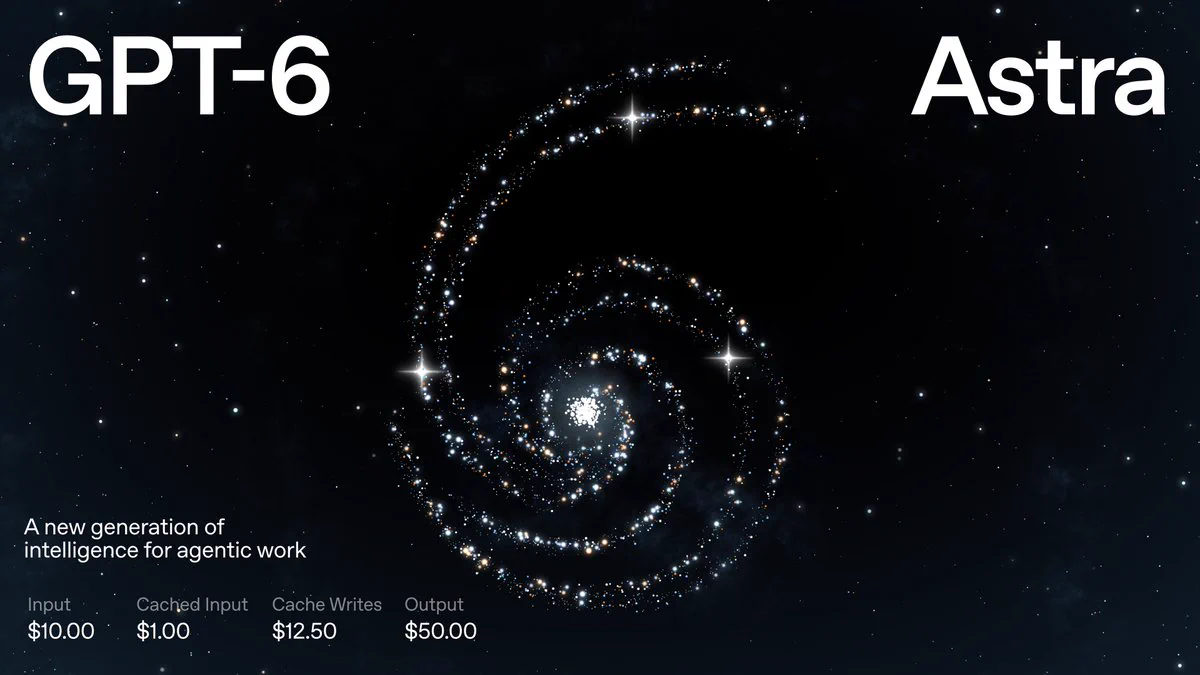
GPT-6 Astra is here, and OpenAI is making a much bigger claim than simply saying it has built a smarter chatbot. The new model is designed to work with computers, write software, solve difficult problems, use tools and handle long, complicated tasks with much less human guidance.
For millions of people who already use ChatGPT, this could be one of the most important upgrades yet.
OpenAI announced GPT-6 Astra on September 3, 2026, with the model initially rolling out to a limited group of organizations before expanding to paid ChatGPT users. The company is also making Astra available through its API and cloud platforms.
But what exactly is Astra, and why is everyone suddenly talking about GPT-6?
What is GPT-6 Astra?
Astra is the name of OpenAI’s latest frontier AI model, officially launched as GPT-6 Astra.
If you have been following OpenAI, you may remember that previous generations focused heavily on making GPT better at conversation, reasoning, coding and understanding different types of information.
GPT-6 Astra takes another step forward.
Instead of simply answering a question, the model is designed to do things on your behalf.
That means interacting with computers and web browsers, working with software, writing code, conducting research and completing multi-step tasks.
OpenAI describes Astra as its most capable model yet for computer use. In practical terms, the goal is to make AI less like a search box and more like an assistant that can actually operate a computer.
Astra could change the way we use ChatGPT
The biggest difference may not be the quality of the answers.
It may be what ChatGPT can actually do after giving you an answer.
Imagine telling ChatGPT:
“Find suitable apartments in Mumbai, compare them and prepare a shortlist.”
A traditional chatbot might give you information about where to search.
An AI agent powered by Astra could potentially browse websites, compare listings, organize information and complete several steps itself.
The same idea applies to work.
You could ask it to research a subject, analyze documents, create a presentation, write software or work through a complicated business task.
This is where AI is moving increasingly quickly—from generating information to taking action.
GPT-6 is not just about making ChatGPT smarter
One of the interesting things about GPT-6 Astra is that its capabilities extend beyond the normal ChatGPT experience.
OpenAI is positioning the model as a foundation for more advanced AI systems and agents.
That means developers can potentially build applications where GPT-6 doesn’t merely respond to users but interacts with other tools and software.
This could eventually affect everything from customer service and programming to research, education and office work.
The important change is the shift from:
“Ask AI a question.”
to:
“Give AI a task.”
That sounds like a small difference, but it could be enormous.
GPT-6 Astra and coding
Coding is another major area where Astra is expected to make a difference.
OpenAI says the model is particularly strong at software engineering and computer use. That is important because coding agents have already started changing how developers work.
A programmer can describe what they want, and an AI system can write code, inspect files, identify problems, make changes and test the result.
This is also where Codex becomes particularly interesting.
OpenAI has been developing Codex as an environment for AI-assisted software development, and its evolution shows where the company sees AI coding heading.
Instead of using AI simply to generate a few lines of code, developers can increasingly delegate larger pieces of a project.
For experienced programmers, that could mean dramatically faster development.
For beginners, it could make building websites, applications and small tools much more accessible.
Astra can use a computer
Perhaps the most exciting part of GPT-6 Astra is its ability to interact with computers.
Computer-use AI has been one of the major goals of the industry because knowing what a button does is very different from actually clicking the right button, navigating a website and completing a complicated workflow.
OpenAI says Astra is designed to perform tasks involving computers and web browsers at a very high level. The company has tested it on tasks such as booking appointments, searching for jobs and looking for apartments.
That opens the door to a completely different kind of ChatGPT.
Instead of ChatGPT telling you how to complete a task, Astra could potentially complete much of the task itself.
Why OpenAI is being careful with Astra
There is another side to the GPT-6 story.
A more capable AI is not automatically a safer AI.
OpenAI says Astra has reached the Critical cybersecurity capability threshold under its Preparedness Framework. According to OpenAI, this means that with appropriate tools and access, Astra can discover previously unknown security vulnerabilities and develop exploitation methods across well-protected systems without someone guiding every individual step.
That is a serious capability.
It could help cybersecurity professionals find vulnerabilities before criminals do.
But the same capabilities could also create risks if they are misused.
As a result, OpenAI says it has introduced stronger security controls, monitoring, isolated testing environments and restrictions around higher-risk activities involving Astra.
This is one reason the GPT-6 Astra rollout is more controlled than a simple “new ChatGPT model is available” announcement.
Is GPT-6 Astra the beginning of AGI?
This is probably the biggest question surrounding the launch.
Some OpenAI executives have suggested that Astra could represent a major milestone on the road to AGI — artificial general intelligence.
OpenAI president and cofounder Greg Brockman has gone further, saying he believes it is reasonable to consider the world to be entering an AGI era.
That does not mean everyone agrees that GPT-6 Astra is AGI.
The term itself remains heavily debated.
A model can be extremely capable at coding, mathematics, research and computer use while still having limitations that humans do not.
So it is probably better to think of Astra as another major step toward increasingly autonomous AI rather than automatically declaring that the AGI problem has been solved.
What does GPT-6 Astra mean for normal ChatGPT users?
For an average ChatGPT user, the biggest benefit may simply be getting more work done with fewer instructions.
Instead of having a long conversation explaining every step, you may increasingly be able to describe the outcome you want.
For example:
Old approach:
“Give me ideas for a website.”
Then:
“Write the HTML.”
Then:
“Fix the CSS.”
Then:
“Add JavaScript.”
Then:
“Find the error.”
Then:
“Make it responsive.”
The Astra approach could be much closer to:
“Build me a responsive website for my music project.”
The AI can potentially handle much more of the workflow.
That doesn’t mean humans become unnecessary.
It means the human may spend more time deciding what should be built and less time manually carrying out every individual step.
What about free ChatGPT users?
The initial GPT-6 Astra rollout is focused on organizations and paid ChatGPT plans.
OpenAI says Astra will become available to ChatGPT Plus, Pro, Business and Enterprise users as the rollout expands. Pro, Business and Enterprise users will also have access to the higher-performance Astra Pro variant.
OpenAI has not announced Astra as a generally available free-tier model in the initial rollout.
So if you are using the free version of ChatGPT, you may have to wait for further announcements.
GPT-6 Astra vs previous GPT models
The easiest way to understand the evolution is to look at what AI is increasingly being asked to do.
Earlier GPT models became impressive at generating text and answering questions.
Later models became much better at reasoning, coding, multimodal understanding and complex tasks.
GPT-6 Astra pushes further toward autonomous computer use and task completion.
That is the real story.
The number 6 is less important than the direction of development.
AI is moving from:
Generate → Reason → Use tools → Take action
And Astra sits much further along that path.
What happens next?
The launch of GPT-6 Astra is unlikely to be the end of the story.
If Astra performs as OpenAI expects, we could see more AI agents capable of handling increasingly complicated jobs.
Developers could build applications that operate software independently.
Businesses could automate larger workflows.
Coders could delegate entire development tasks to AI.
Researchers could use AI systems to explore enormous amounts of information.
And ordinary ChatGPT users could eventually have digital assistants capable of handling tasks that currently require several different applications.
But the more capable these systems become, the more important safety, reliability and human oversight become.
That may ultimately be the real challenge of the GPT-6 generation.
GPT Astra is bigger than another ChatGPT update
It is tempting to look at every new GPT release as simply another chatbot becoming smarter.
I don’t think that is the most interesting way to look at Astra.
The more important change is that AI is becoming increasingly capable of acting in the digital world.
GPT-6 Astra can reason, code, use computers and work through complicated tasks. OpenAI is also treating its cybersecurity capabilities as powerful enough to require a new level of safeguards.
That makes Astra more than another version of ChatGPT.
It represents a shift toward AI that doesn’t just tell us what to do.
It increasingly tries to do it for us.
And if that trend continues, the next few years of AI could look very different from the last few.
Sources
OpenAI’s official information about Astra and its safety evaluation can be found on OpenAI, including its September 2026 announcement on Astra’s cybersecurity capabilities.