AI music generation is moving surprisingly fast, and Lyria 3.5 is the latest example.
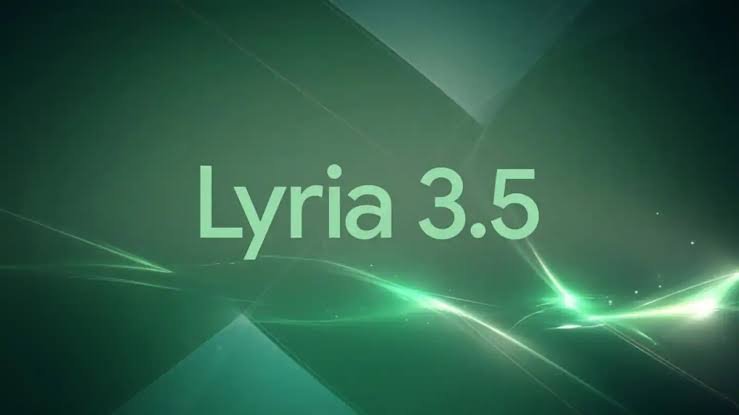
Developed by Google DeepMind, Lyria 3.5 is Google’s newest music-generation model, designed to create high-quality songs from text prompts. Google says the model improves on its previous generation in musicality, lyrics, vocals and creative control. It launched in Google Flow Music on July 29, 2026.
For musicians and producers, though, the interesting question isn’t simply “Can AI make music?”
It is becoming:
“How much control can I actually have over the music?”
And that’s where Lyria 3.5 gets interesting.
What Is Lyria 3.5?
Lyria 3.5 is an AI music-generation model from Google DeepMind that can turn a text description into music.
You can describe things such as the genre, mood, instruments, tempo, vocal character and overall direction, and the model attempts to turn those instructions into a coherent musical track.
Google describes it as its most capable music-generation model to date.
The model uses a latent-diffusion architecture operating on temporal audio latents and was trained on audio data annotated with text descriptions.
But you don’t need to understand any of that to use it.
For a creator, the experience is much simpler:
Write a prompt → generate music → listen → refine the idea.
What Makes Lyria 3.5 Different?
Google isn’t presenting Lyria 3.5 simply as a machine that generates random musical clips.
The focus is on giving creators more control over the final result.
Google highlights four major improvements.
Better Musicality
Lyria 3.5 is designed to create richer and more complex melodic structures while keeping the music coherent.
This matters because one of the biggest problems with AI-generated music has traditionally been that a track can sound impressive for a few seconds but become repetitive or musically confusing as it continues.
Google says Lyria 3.5 improves significantly over Lyria 2 in audio fidelity and can follow both simple and complex musical instructions more accurately.
Better Lyrics
Lyrics are another major improvement.
Lyria 3.5 is designed to understand instructions about lyrics and their structure more effectively.
That means you can give the model a more detailed creative direction instead of simply asking for “a sad song about heartbreak.”
Google says the model demonstrates improved prompt adherence with lyrics and better structural awareness.
More Realistic Vocals
This might be the most noticeable upgrade for many listeners.
Google says Lyria 3.5 delivers more expressive and emotionally nuanced vocals, along with improved pronunciation.
For anyone who has experimented with AI music generators, this is a significant area of development.
AI vocals aren’t just about getting the right notes. They need phrasing, dynamics, emotion and believable pronunciation.
Lyria 3.5 is attempting to move further in that direction.
More Creative Control
The model also gives creators more control over things such as tempo and song duration.
Google’s Lyria platform currently supports tracks of up to around three minutes, making it much more useful for people who want something closer to a complete song rather than a short experiment.
Lyria 3.5 Can Make Different Genres
One of the interesting things about the demonstrations is the range of styles.
Google showcases prompts covering everything from:
- Bossa trip-hop
- Spanish dance pop
- French alternative pop
- Neo-soul
- R&B
- Afro-pop
- Jazz fusion
- Reggaeton
- Glitch electronica
- Funk
- Indie singer-songwriter music
There is even a Hindi singer-songwriter example featuring acoustic guitar, light percussion and strings on Google’s Lyria page.
That doesn’t mean every generation will sound professional.
But it shows how broadly the model can interpret musical descriptions.
Lyria 3.5 Can Work With Images Too
One particularly interesting feature of the Lyria family is the ability to use images as creative inspiration.
Instead of describing everything through text, creators can upload an image and ask Lyria to turn the visual concept into a piece of music. Google describes this as “compose with images.”
Imagine uploading an image of a rainy city at night and asking for a slow cinematic electronic track.
Or uploading artwork for an upcoming short film and generating a musical idea around its atmosphere.
This could be useful for filmmakers, YouTubers, game developers and content creators who don’t necessarily have a musical background.
Is Lyria 3.5 Available to Everyone?
Lyria 3.5 is being rolled out through Google Flow Music. Google says the model is available through that service, while its broader Lyria family is also available through various Google products and developer platforms.
The important distinction is that Lyria 3.5 isn’t simply another standalone website where you type a prompt.
It is part of Google’s wider AI music ecosystem.
Earlier versions of Lyria 3 were integrated into Gemini, Google AI Studio and developer APIs, while Lyria 3 Pro was made available through platforms including Vertex AI.
Lyria 3.5 for Musicians and Producers
This is where things get particularly interesting.
If you’re already a musician, you probably don’t need AI to replace your entire production process.
But you could use something like Lyria 3.5 for idea generation.
For example, you could generate:
A chord progression idea
A reference arrangement
A rhythmic concept
A demo vocal
An unusual instrumental combination
A background track
A songwriting starting point
Instead of staring at an empty DAW project, you could generate an idea and then take it somewhere completely different yourself.
That’s potentially much more useful than treating AI as a button that makes a finished song.
Can Lyria 3.5 Replace Music Producers?
Not really.
At least not if you’re talking about professional music production.
An AI model can generate an impressive song, but producing music involves far more than generating audio.
A producer makes decisions about:
- Song structure
- Arrangement
- Instrument selection
- Performance
- Recording
- Editing
- Mixing
- Mastering
- Artist direction
- Emotional impact
AI can increasingly assist with some of these things, but human taste remains extremely important.
And ironically, the better AI music becomes, the more important creative direction may become.
If everyone can generate music, the person who knows what music should sound like becomes even more valuable.
Lyria 3.5 and AI Music Concerns
There is also a serious conversation happening around AI-generated music.
Artists and musicians have concerns about training data, copyright, consent, imitation and the economic impact of generative music.
Google says it uses filtering and safety measures in the development of Lyria and has been working with artists on safeguards. Google also says Lyria-generated audio includes an imperceptible SynthID watermark that can be used to identify AI-generated or AI-edited music.
For musicians planning to commercially release AI-generated material, however, it is still important to understand the terms of the particular service being used and any applicable copyright and licensing rules.
Is Lyria 3.5 the Best AI Music Generator?
That’s difficult to answer objectively.
There are several strong AI music-generation platforms, and each has its own strengths.
What makes Lyria 3.5 particularly interesting is the combination of music quality, vocal improvement, prompt adherence and creative control.
Google is clearly trying to move AI music away from the novelty stage.
The goal is no longer simply:
“Look, the computer made a song.”
It’s becoming:
“Can the computer actually help me create the song I have in my head?”
That’s a much harder problem.
The Future of AI Music Is Getting Interesting
Lyria 3.5 is another sign that AI music generation is moving rapidly.
A few years ago, AI-generated songs could often be identified almost immediately because of strange vocals, awkward arrangements and unnatural transitions.
Those problems haven’t disappeared completely.
But the technology is improving quickly.
Lyria 3.5’s better vocals, more coherent musical structures and greater control suggest that we’re moving toward AI tools that can become genuine creative collaborators rather than simple novelty generators.
And for musicians, that may actually be the most exciting part.
AI doesn’t necessarily have to replace the person sitting behind the DAW.
It can give that person more ideas to work with.