You can spend months writing, recording, producing and mixing a track—and then discover that getting it in front of listeners can also cost money. Fortunately, there are several platforms where you can release music for free, either by uploading the song directly or by using a distributor that doesn’t charge an upfront fee.
But there’s an important distinction: free music hosting is not the same as free distribution to Spotify and Apple Music.
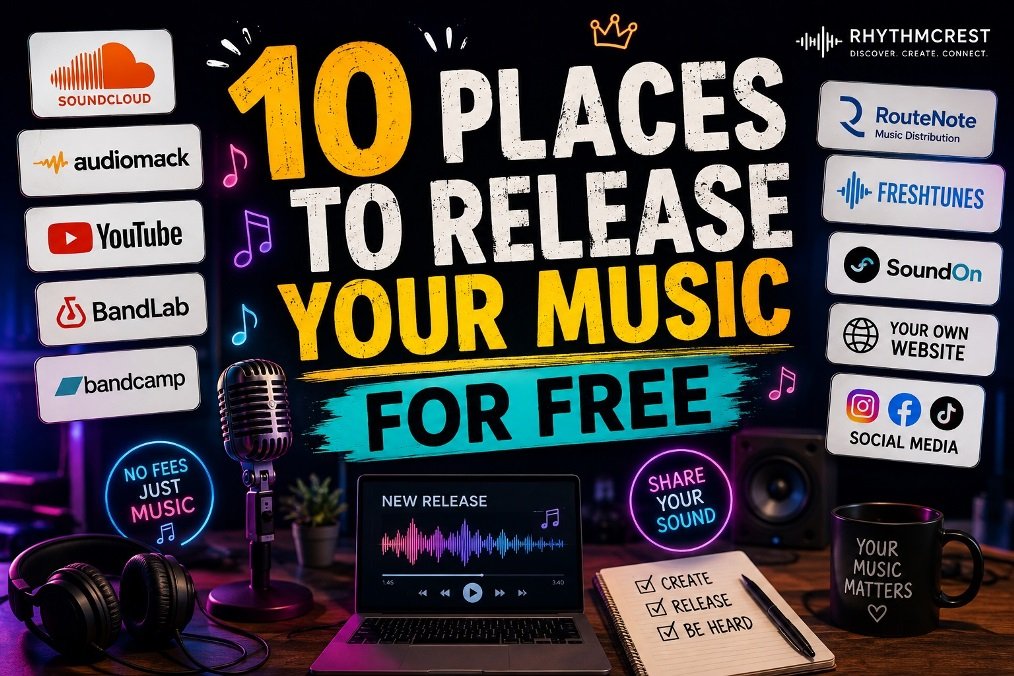
Here are 10 platforms worth considering if you’re an independent musician looking for places to release music without paying upfront.
1. SoundCloud
SoundCloud remains one of the easiest places to release music independently.
You can upload your tracks directly, create a profile, build followers and share individual songs without paying for basic hosting. SoundCloud’s free tier is primarily designed for hosting and discovery; distribution to external services is a separate paid feature.
It’s particularly useful for:
- New singles
- Demos
- Remixes
- Unreleased tracks
- Instrumentals
- Producer collaborations
If you’re trying to build an audience before spending money on distribution, SoundCloud is still a useful starting point.
2. Audiomack
If you’re looking for a genuinely free platform with unlimited uploads, Audiomack is one of the strongest options.
Audiomack says artists can upload an unlimited number of songs and albums for free, with no premium creator account required. It also provides artist statistics and tools for promoting releases.
There is another interesting advantage: Audiomack has its own monetization program, although eligibility and availability can vary.
For an independent artist, this makes Audiomack more than just a place to park your songs.
3. YouTube
Don’t underestimate YouTube when you’re releasing music.
You can upload your official music video, lyric video, visualizer, audio track or even a simple artwork video without paying an upload fee.
For independent musicians, YouTube can actually become one of the most important parts of a release strategy because your music can be discovered through Google and YouTube searches as well as recommendations.
You can also build a dedicated artist channel and gradually turn individual songs into a larger catalogue.
The catch is that uploading a song to YouTube yourself isn’t the same as getting it into YouTube Music’s official music catalogue. That generally involves distribution.
4. BandLab
BandLab is another interesting option, especially if you’re an artist who also wants to create music online.
Its free platform lets musicians record, edit and mix music, while BandLab also allows users to publish albums directly to their BandLab profile.
You can use it to:
- Share original songs
- Publish albums
- Build a profile
- Collaborate with other musicians
- Connect with other creators
BandLab also has a separate distribution service for getting music onto DSPs such as Spotify and Apple Music, so don’t confuse the free BandLab publishing platform with its distribution offering.
5. Bandcamp
If your goal isn’t just getting streams, but actually selling music, Bandcamp deserves a place on your list.
An artist account is free. Bandcamp takes a percentage when you sell digital music or merchandise rather than charging you an upfront subscription for the basic artist account. Its current fee is 15% on digital music sales and 10% on merchandise, with payment-processing fees separate.
That makes Bandcamp particularly attractive for artists with dedicated fans.
You can sell:
- Singles
- Albums
- EPs
- High-quality downloads
- Merchandise
- Special editions
In other words, you don’t necessarily need millions of streams to make money from your music.
6. RouteNote
Now we get into actual free music distribution.
RouteNote offers a free distribution plan that allows independent artists to send releases to digital music platforms without an upfront fee.
The important catch is that you don’t keep all of the revenue.
RouteNote currently says artists on its Free plan receive 85% of the revenue generated from their releases. There are no upfront distribution fees for that plan.
That’s a pretty reasonable trade-off if you’re just starting out and don’t want to pay a distributor before you know whether your music will generate significant income.
7. FreshTunes
FreshTunes is another option worth checking if you’re specifically searching for free music distribution.
The company currently advertises free unlimited distribution for independent artists, along with distribution to multiple outlets and access to statistics.
Its current free plan does have commissions on certain types of monetization, including YouTube Content ID, songwriter royalties and UGC platforms, so “free” doesn’t necessarily mean you keep every rupee or dollar generated by every revenue stream.
Still, for an artist with no distribution budget, it can be a useful option.
8. SoundOn
If you’re particularly interested in TikTok-driven music discovery, SoundOn is another distributor to investigate.
SoundOn’s current artist materials promote free distribution to major platforms, with no upfront distribution or subscription fee, while retaining ownership of the music. Its ecosystem is closely connected with TikTok and CapCut.
That makes it interesting for artists who believe their song could work well in short-form videos.
However, before choosing any distributor, always check the current terms available in your country and for your particular release.
9. Your Own Website
This is the one many independent artists overlook.
You don’t always need another music platform to release music.
You can publish a song on your own website, embed a player, add lyrics, write the story behind the song and give listeners links to streaming platforms.
Your website gives you something Spotify, SoundCloud or Audiomack doesn’t:
complete control over your own digital home.
For example, an independent singer can create a dedicated page for every release containing:
- Song title
- Cover artwork
- Lyrics
- Credits
- Music video
- Streaming links
- Download options
- Artist information
It can also help your music pages appear in Google search results over time.
10. Social Media Platforms
Instagram, Facebook and other social platforms aren’t traditional music streaming services, but they have become extremely important places to release and discover music.
You can post:
🎵 A teaser
🎵 A chorus
🎵 An acoustic version
🎵 A live performance
🎵 A behind-the-scenes clip
🎵 A music video
The interesting part is that you don’t necessarily need a huge audience before releasing something.
One good short-form video can introduce your song to people who have never heard of you.
For independent musicians, social media should therefore be treated as part of the release—not merely advertising for it.
But What About Spotify and Apple Music?
This is where many new artists get confused.
You generally cannot simply create a Spotify artist account and upload your song directly like you can on SoundCloud or YouTube.
For Spotify, Apple Music, Amazon Music and similar DSPs, you’ll normally need a music distributor.
That’s why services such as RouteNote, FreshTunes and SoundOn are particularly relevant when you’re searching for free music distribution rather than simply free music hosting.
Which Free Music Platform Is Best?
It depends on what you actually want.
| Your Goal | Best Options |
|---|---|
| Upload music quickly | SoundCloud, Audiomack |
| Build a music community | BandLab, SoundCloud |
| Sell music directly | Bandcamp |
| Distribute to Spotify & Apple Music | RouteNote, FreshTunes, SoundOn |
| Reach YouTube audiences | YouTube |
| Promote through short videos | Social media, SoundOn |
| Build your own music hub | Your website |
Don’t Choose a Distributor Just Because It’s Free
This is probably the most important advice for independent artists.
Before uploading your song, check:
Who owns the master?
What percentage of royalties do you keep?
Does the distributor charge for Content ID?
What happens if you stop using the service?
Can you move your release to another distributor later?
Does it support your country and your preferred stores?
A distributor that costs nothing upfront can still make money by taking a percentage of your earnings.
That’s not necessarily bad—but you should know what you’re agreeing to.
The Smartest Strategy for an Independent Artist
You don’t actually have to choose just one platform.
A new artist could release a single through a free distributor to reach Spotify and Apple Music, upload the full track to Audiomack and SoundCloud, publish a visualizer on YouTube, and use Instagram or other social platforms to promote the chorus.
Then the artist can direct serious fans to their own website or Bandcamp page.
That’s a much stronger strategy than simply uploading a song somewhere and hoping people find it.