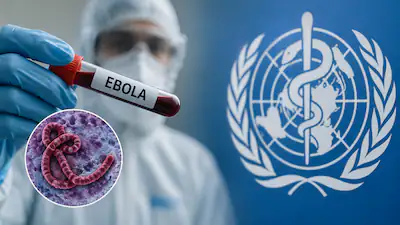
Hearing the word “Ebola” instantly reminds people of deadly outbreaks, quarantine zones, and emergency health alerts.
Although outbreaks are relatively rare compared to some other diseases, Ebola remains one of the world’s most dangerous viral infections because of its high fatality rate and severe symptoms.
In this article, we will cover:
- ebola
- ebola symptoms
- ebola virus
- ebola outbreak
- ebola treatment
☣️ What Is Ebola?
Ebola is a serious viral disease that can cause severe illness and sometimes death in humans.
The virus mainly spreads through:
✔ direct contact with infected body fluids
✔ contaminated surfaces
✔ infected animals in some cases
It is not considered an airborne disease like the flu.
🤒 Ebola Symptoms People Should Know
The early symptoms of Ebola can initially look similar to common viral illnesses, which sometimes makes early detection difficult.
Common Ebola symptoms include:
✔ high fever
✔ severe weakness
✔ muscle pain
✔ headache
✔ sore throat
As the illness worsens, more serious symptoms may appear:
✔ vomiting
✔ diarrhea
✔ stomach pain
✔ internal bleeding
✔ external bleeding in severe cases
This is why Ebola became globally feared during major outbreaks.
⚠️ Why Ebola Is Considered So Dangerous
The biggest concern with Ebola is how quickly the disease can become severe once symptoms progress.
In serious cases, Ebola can affect:
✔ organs
✔ blood clotting
✔ immune response
leading to life-threatening complications.
That’s why outbreaks often trigger immediate international health responses.
🌍 Where Has Ebola Spread Before?
Major Ebola outbreaks have historically affected parts of:
- Democratic Republic of the Congo
- Guinea
- Liberia
- Sierra Leone
Global concern increases rapidly whenever new Ebola cases are reported because health authorities work aggressively to prevent wider spread.
🐒 How Does Ebola Start?
Scientists believe Ebola originally came from animal transmission before spreading between humans.
Certain wild animals, especially infected mammals, are believed to play a role in transmission chains.
This is why wildlife monitoring and outbreak control are extremely important in affected regions.
💉 Is There Treatment for Ebola?
Over the years, medical science has improved significantly in handling Ebola outbreaks.
Today, treatment focuses on:
✔ supportive medical care
✔ hydration
✔ symptom management
✔ intensive monitoring
Vaccination and improved outbreak response systems have also helped reduce risks during recent outbreaks.
Early treatment dramatically improves survival chances.
📈 Why ‘Ebola Symptoms’ are in news again?
People search about Ebola immediately because the disease has such a frightening global reputation. The topic spreads fast online whenever there is:
✔ outbreak news
✔ suspected cases
✔ global health alerts
✔ travel concerns
Fear and uncertainty make health-related searches explode very quickly.
🧠 Social Media Often Creates Panic
One major problem during disease outbreaks is misinformation. Fake posts sometimes exaggerate:
❌ spread rates
❌ death rates
❌ global risk levels
which can create unnecessary panic. Reliable health information should always come from trusted medical and government sources.
🌍 Why Global Health Systems Monitor Ebola Closely
Health agencies worldwide monitor Ebola carefully because rapid containment is critical.
The faster outbreaks are identified:
✔ the easier tracing becomes
✔ treatment improves
✔ spread reduces
✔ public panic decreases
Global coordination plays a major role during infectious disease emergencies.
👀 Can Ebola Become a Global Pandemic Again?
Health experts continue monitoring the disease closely.
While Ebola outbreaks remain serious, modern surveillance systems, vaccines, and medical response strategies are much stronger today compared to earlier outbreaks.
Still, global health authorities remain cautious because infectious diseases can evolve unpredictably.